

What CNA reported on 27 August
CNA reported that former swimming coach Quek Yeong Kang, also known as Alex, was sentenced to two years’ jail and three strokes of the cane after being convicted at trial on three molestation charges involving the same 10-year-old student during three lessons in October 2023.
CNA also reported that four other students gave statements to Police. Three said they had seen the coach tickling students during lessons and found it unusual. This article does not treat one behaviour as proof of misconduct by itself; the lesson for families is that a pattern of unexplained contact or learner discomfort should be questioned, documented, and escalated.
The source did not name the pool or the school because identifying details were protected. CNA did not identify Penguin Swim School as involved. Penguin is not republishing graphic details or trying to identify the child, family, pool, or operator.
What professional physical guidance should look like
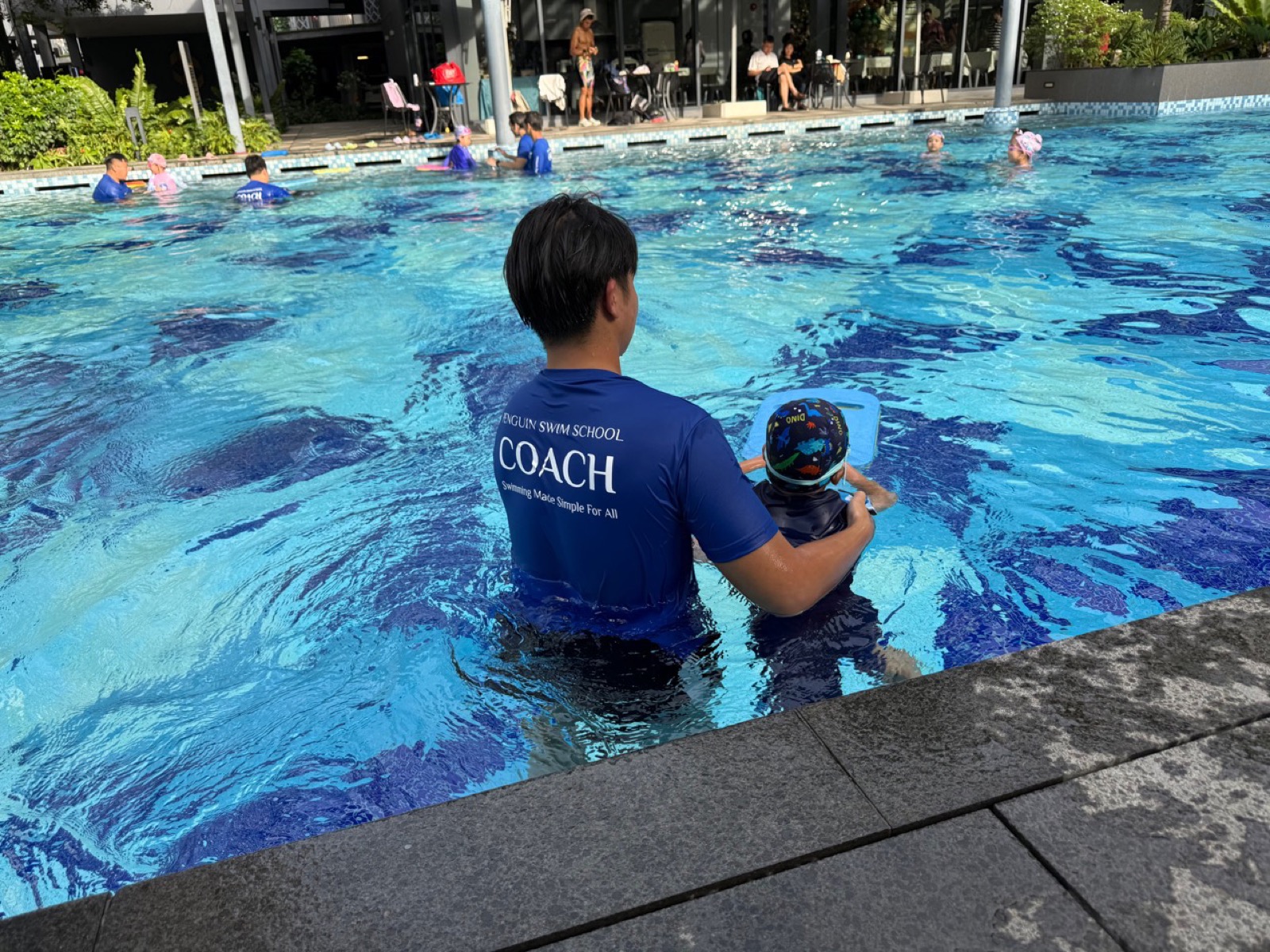
Swimming instruction can involve close positioning. A coach may need to demonstrate arm movement, support floating, guide kicking, or help a learner recover from an immediate safety risk. That contact should be necessary, appropriately bounded, explained where practical, and easy for the learner and parent to understand.
SportSG’s Safe Sport guidance tells coaches to work in an open environment and follow the Rule of Two. Safe Sport describes the goal as making interactions open, observable, and justifiable. A qualification is useful evidence of baseline competence, but it is not a substitute for boundaries, observation, communication, and a reporting process.
Questions parents should ask before and during lessons
Before booking, ask who the assigned coach is, how physical guidance is explained and limited, whether the lesson can be observed, how progress is communicated, and which management contact handles a conduct or safeguarding concern.
During lessons, look for a generally visible coaching environment and purposeful drills. After class, ask neutral questions such as “How did the lesson feel?” or “Was there anything you did not like?” A child who expresses discomfort should be listened to calmly rather than dismissed or repeatedly questioned.
What to do if a learner raises a concern
Make the learner safe, stop further contact with the person of concern while advice is obtained, listen at the learner’s pace, and record the learner’s own words and relevant timing. Do not blame the learner, promise secrecy that prevents protection, conduct an amateur investigation, or identify the child publicly.
For immediate danger, call Police at 999. SMS 70999 is available when it is unsafe to call or the person cannot speak. Abuse concerns may be reported to the 24-hour National Anti-Violence and Sexual Harassment Helpline at 1800-777-0000. A sport-related concern can also be raised through Safe Sport’s reporting channel.
Penguin’s professional standard
Penguin Swim School does not tolerate abuse or inappropriate contact. We expect coaching contact to be necessary for instruction or immediate safety, professionally bounded, explained where practical, and observable. Families should raise any concern with Penguin management promptly so that the learner can be protected and the matter can be documented and escalated to the appropriate authority.
Penguin management has stated that no comparable occurrence has been reported to management since incorporation. That is a management-reported position, not a claim that any organisation is immune from risk. The responsible standard is continued vigilance, professional conduct, clear communication, and a culture in which learners and families can speak up.
When enquiring, share the learner’s age, comfort level, prior experiences, preferred pool, and any coach or observation preference. Those details help Penguin recommend a suitable coach and lesson setup rather than forcing a generic class.