

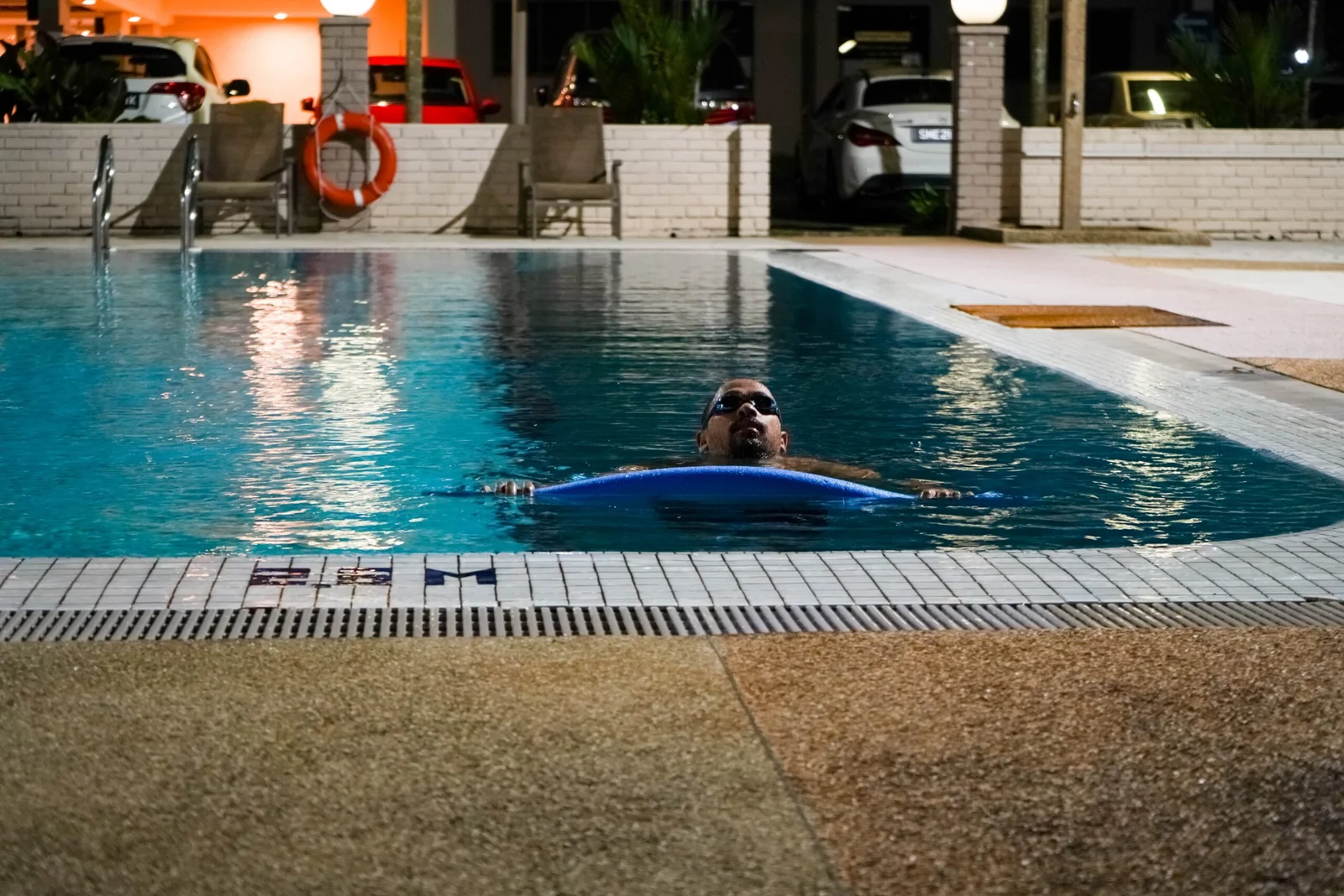
Start with safety and comfort
If your child has additional needs, the first swimming lesson should not be judged by distance or stroke labels. It should check whether the learner can enter the pool safely, tolerate the environment, understand the coach, and leave with more trust than fear.
Singapore parents often search for special needs swimming lessons after a difficult group class, a frightening pool moment, or a therapist or teacher suggestion to try water activity. The useful question is not whether swimming is universally suitable. The useful question is what setup gives this specific learner the best chance to be safe, calm, and engaged.
What the first lesson should observe
The coach should observe communication style, attention span, sensory comfort, response to instructions, fear level, safe entry and exit, wall holding, bubbles, floating support, kicking, and how quickly the learner becomes overloaded or tired.
Parents should share practical details before the lesson: words that help, words to avoid, whether visual demonstration works better than verbal instruction, whether touch prompts are acceptable, and what usually calms the learner when a new environment becomes too much.
Why private or small-group coaching often fits
Many special needs learners do better when the coach does not have to split attention across a large class. Private or very small sessions allow more repetition, clearer routines, shorter explanations, and more room to pause before distress builds.
A small group can still work when learners have similar water confidence, communication needs, and goals. It should not be chosen only because it is cheaper or easier to schedule. If one learner needs one-to-one support, that should be said plainly before booking.
Check the pool environment
The pool matters as much as the coach. Check noise, crowding, water depth, steps, railings, shower and changing routines, deck safety, and whether a parent or caregiver can stay close enough to reassure the learner without blocking the coach.
For condo or private-pool lessons, confirm that outside coaching is allowed and that the pool has a safe teaching area. A familiar pool can reduce anxiety, but only if access rules, visitor registration, depth, and timing are workable.
Use inclusive sport guidance without overpromising
Singapore has a broader inclusive-sport direction, and SDSC describes swimming as a flexible option for swimmers with disabilities. That supports the value of water activity, but it does not mean every child should be pushed into the same lesson pace.
HealthHub also reminds parents to keep children closely supervised around water. For a special needs learner, supervision, medical context, and parent communication are not side notes. They are part of the lesson design.
When to pause or adapt
Pause when the learner is repeatedly distressed, cannot follow a safety instruction, is physically exhausted, shows breathing discomfort, or has a medical condition that needs doctor guidance before water activity. A premium coach should be willing to step back to wall work, dry explanation, parent-supported reassurance, or a shorter win.
Progress can look small from the outside. Calm pool entry, accepting water on the face, holding the wall, blowing bubbles, floating with support, or following a simple safety cue can be meaningful early progress.
How Penguin should be used
Penguin has a dedicated special needs swimming lesson route with 1-to-1 and small-group options, 45-minute lesson context, and private or public pool flexibility. Parents should still treat the booking conversation as a fit check, not an automatic promise that every schedule, pool, coach, or group format is right for the learner.
The right recommendation may be one-to-one private lessons first, a sibling or small-group setup later, a familiar condo pool, or a slower start focused on water confidence before stroke correction or SwimSafer-related goals.
What to send before booking
Send the learner age, current water confidence, diagnosis or support needs if relevant, communication style, triggers, calming strategies, previous lesson experience, goal, preferred pool or area, pool-access rules, parent or caregiver presence needs, medical or seizure-safety considerations, and available days and times.
That information lets Penguin check whether special needs, private, kids, condo, family, SwimSafer, Mandarin, or another pathway is the most realistic fit. It does not confirm a coach, slot, price, diagnosis-specific outcome, or certification result until the booking conversation is complete.