

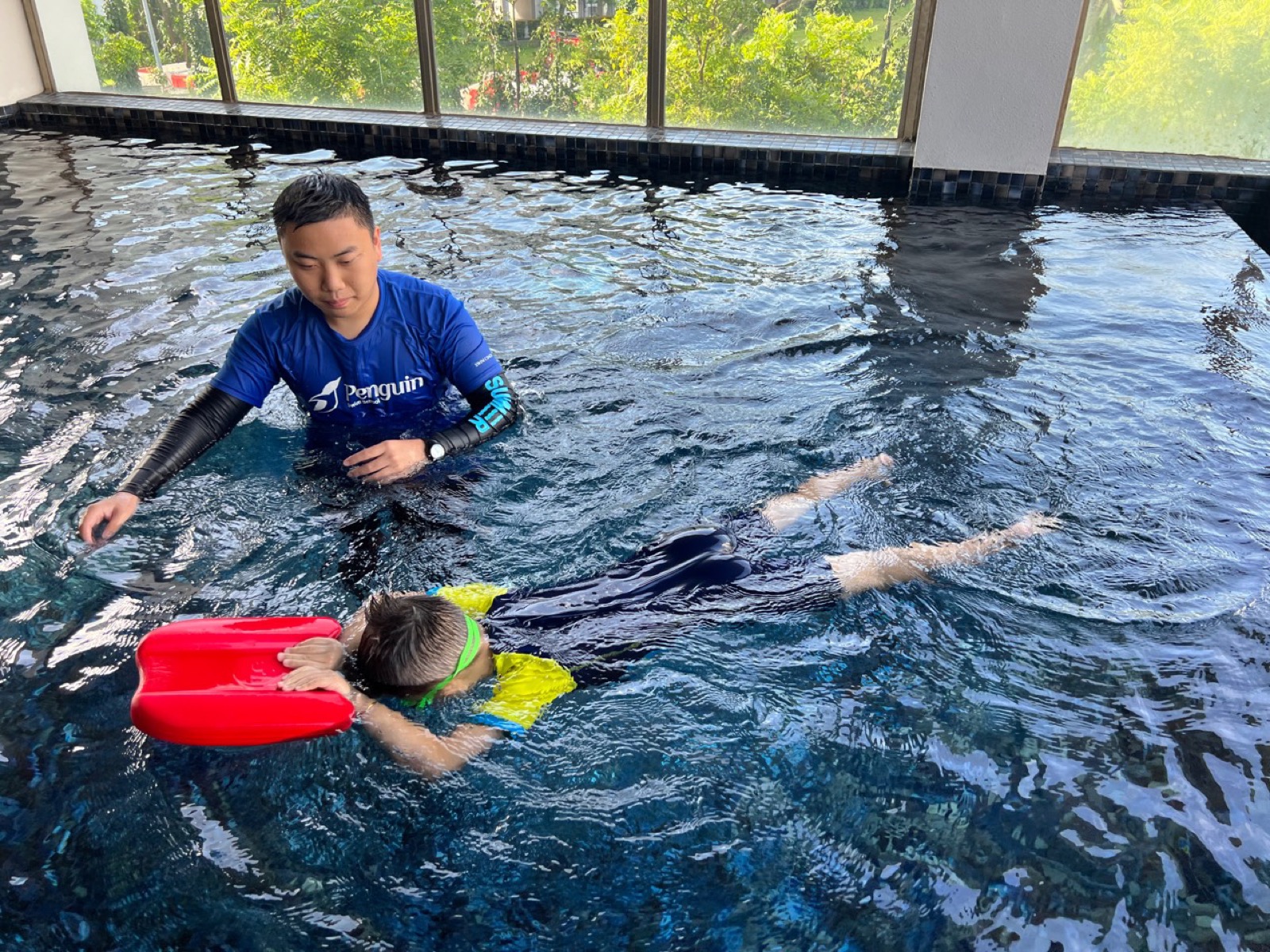
The short answer for parents
A child's first swimming lesson should feel calm, structured, and safe. Bring the basics, arrive early enough that your child is not rushed, and expect the coach to spend time reading your child's confidence before pushing technique.
The first lesson is not only about whether your child can kick or blow bubbles. It is a fit check: learner readiness, coach style, pool setup, safety habits, and the right lesson format for the next few weeks.
What to bring
Pack proper swimwear, a towel, dry clothes, a wet bag, water, and goggles if your child is old enough to use them comfortably. Younger children may also need a swim diaper, a familiar towel, and a simple snack for after the lesson.
Check the lesson venue rules before packing flotation aids or toys; the coach may use different equipment. For condo or private-pool lessons, also prepare access instructions, visitor registration details, pool rules, and a meeting point.
What to tell the coach before you arrive
Share your child's age, current water comfort, any previous lessons, fear triggers, relevant medical or sensory considerations, and whether the child can follow simple instructions near the pool. Mention the goal, but avoid coaching the answer or overstating the current level.
If the child is unwell or has a condition that affects participation, check the appropriate health advice and tell the school before the lesson. The school needs accurate information to decide whether the planned session is suitable.
What the coach should check first
A good first lesson should check whether the child can listen near water, enter safely, hold the wall, accept support, put the face near or in the water, float with help, and recover calmly after a mistake.
These checks matter because Singapore swimming lessons often connect later to SwimSafer, water survival, stroke development, and safer pool habits. Sport Singapore describes SwimSafer 2.0 as a national water-safety programme with progressive stages, so the early foundation should not be treated as a throwaway warm-up.
What not to force on day one
Do not force a frightened child to submerge, jump, or swim away from the wall just to prove progress. Fear on the first day is useful information for the coach, not something to hide.
If the child is nervous, the first wins may be smaller: standing calmly, holding the wall, blowing bubbles, accepting a supported float, or leaving the pool willing to try again.
When private or condo lessons make sense
Private lessons can be a better first step when the child is very nervous, easily distracted, older but embarrassed, preparing for a specific SwimSafer goal, or starting from a condo pool that already feels familiar.
A condo pool can reduce travel and help the child start in a known environment, but parents should check depth, crowding, weather exposure, management rules, and whether the coach can supervise safely from suitable positions.
For visiting families and expatriates
If this is a child's first lesson during a Singapore holiday, relocation, or short stay, share the complete date window and choose one realistic priority such as water confidence, breathing comfort, or safer pool habits. Do not expect a compressed schedule to guarantee a full stroke or certification outcome.
Families staying near Sentosa or living around Orchard should share the exact pool or area and confirm whether outside coaches are allowed. An area name alone does not establish that Penguin can teach at that pool; access, timing, learner needs, and coach availability still need confirmation.
How to judge the first lesson
Do not judge only by distance swum. A useful first lesson should give parents a clearer answer on readiness, fear level, attention, safety habits, and the next two or three lesson priorities.
After the lesson, you should know whether the child is ready for a kids class, toddler pathway, private coaching, a sibling or family setup, or a slower water-confidence start.
What to send Penguin before booking
To get a better recommendation, send your child's age, current water confidence, whether they can put the face in, past lesson experience, any fear trigger, preferred pool or area, available timing, goal, and whether a premium private or condo setup fits the family budget.
This keeps the enquiry practical. Penguin can then recommend the right starting path instead of treating every first lesson as the same generic class request.