

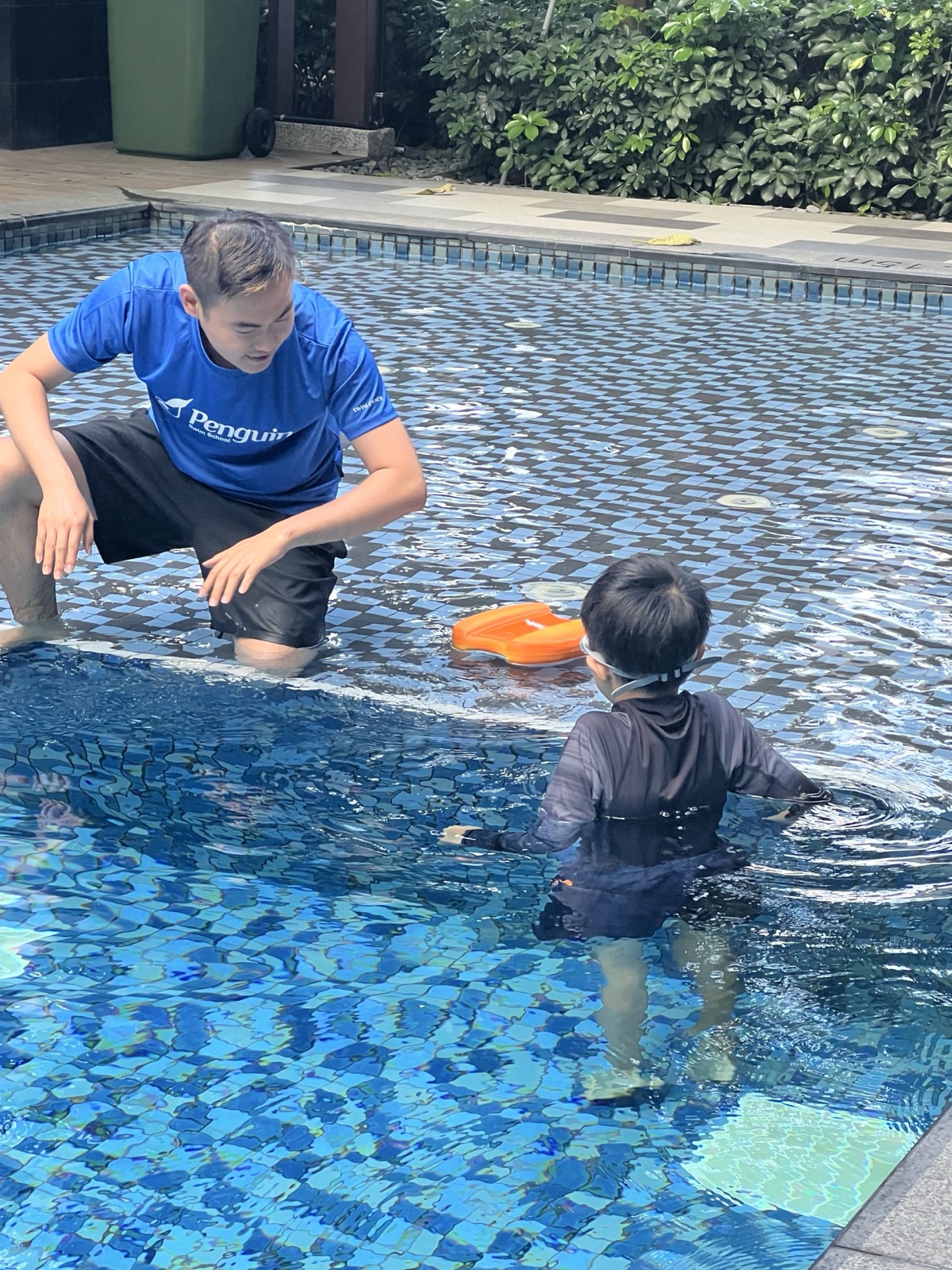
Why this matters in July
July is a useful month for Singapore families to review water-safety habits because World Drowning Prevention Day is marked on 25 July. The point is not to create fear. The point is to turn a familiar condo pool into a properly supervised learning environment.
For Penguin Swim School, this is also a quality filter. Families who value safety, coach fit, clear communication, and structured progress are usually a better match than families looking only for the cheapest nearby class.
Why condo lessons need a safety checklist
Condo swimming lessons are popular in Singapore because families can learn at a familiar pool without travelling across the island. That convenience is useful, especially for nervous children, siblings, adult beginners, and families with tight schedules.
But a condo pool is still a real water environment. Parents should treat the first lesson as a safety setup, not only a timetable booking. KKH Child Injury Surveillance Report 2024 reports that most child drowning cases in its reviewed data occurred in swimming pools, which is a reminder that supervision and preparation matter even in familiar settings.
Check the pool before the first lesson
Before confirming a condo lesson, check whether the pool has a suitable shallow area, clear steps or entry point, good lighting, visible rescue equipment, and enough quiet space for instruction.
Parents should also check condo rules. Some developments require booking, restrict outside coaches, limit class size, or have rules on lesson timing. Sorting this out before the coach arrives prevents a messy first lesson.
If the pool is busy during peak hours, tell the school. A quieter time slot may be better for young children, nervous learners, special-needs learners, adult beginners, or any swimmer who needs more coach attention.
Supervision is still the parent baseline
A coach can teach and supervise the lesson, but parents should not treat a private swimming lesson as a complete replacement for adult awareness around the pool.
HealthHub advises close supervision around water, including keeping an adult within arm's length for young children and avoiding distractions such as mobile-phone use. During a lesson, that means the parent or caregiver should know where the child is, how the lesson is being run, and what to do if the learner is uncomfortable or tired.
For private-pool lessons, a simple rule helps: one adult should know who is actively watching, where the learner can stand or hold the wall, and when the lesson should pause because of fatigue, weather, crowding, or discomfort.
What a coach should check on arrival
A suitable coach should look at the pool environment before pushing technique. For young learners, that includes depth, entry point, wall access, slippery surfaces, crowd level, weather, and where the child can safely pause.
For adult beginners or nervous children, the coach should also ask about fear level, previous experience, medical or sensory considerations if relevant, and whether the learner is comfortable putting the face in the water.
How to judge whether the first lesson went well
Do not judge a first condo lesson only by how far the learner swam. A better first signal is whether the learner understood the pool rules, entered safely, listened to the coach, practised calmly, and left with clearer confidence.
For children, parents should look for appropriate coach distance, clear explanation, safe handling, and a lesson pace that matches the child. For adults, privacy, respect, and breathing control often matter more than speed.
When condo lessons are the premium choice
Condo swimming lessons are especially useful when the learner benefits from privacy, a familiar pool, less travel, or a quieter environment. This can apply to nervous children, siblings, adult beginners, ladies-only learners, and families who want a coach to come to a suitable pool.
Premium does not mean complicated. It means the school should ask better questions before assigning a coach: learner age, current ability, pool depth, pool rules, parent concerns, preferred timing, language needs, and whether the goal is confidence, SwimSafer, stroke correction, fitness, or safety.
What to send Penguin before booking
When asking Penguin Swim School about condo swimming lessons, send the learner age, current ability, fear level, condo name or area, pool access rules, preferred timings, and whether the lesson is for one learner, siblings, a family group, or an adult beginner.
If safety is your main concern, say so directly. Penguin can then recommend whether a private condo lesson, smaller self-formed group, SwimSafer-focused pathway, or water-confidence start is the better fit.