

The short answer for parents
Yes, siblings can sometimes learn swimming together in Singapore, including at a suitable condo or private pool. But they should not be forced into the same class just because the timetable is convenient.
The better question is whether one coach can keep both children safe, engaged, and progressing. If one child is nervous at the steps while the other is ready to swim lengths, the lesson probably needs a split plan or separate coaching.
What makes a sibling lesson work
A shared sibling lesson works best when the children are reasonably close in water confidence, listening ability, and lesson goal. They do not need to be the same age, but the coach should not have to teach two completely different lessons at once.
For example, two primary-school children who can enter the pool calmly and practise similar kicking or breathing drills may learn well together. A toddler and an older SwimSafer learner usually need a more careful structure.
Different ages need different safety decisions
Singapore parents often think in age bands, but a coach should also check pool depth, wall access, weather, crowding, fatigue, and whether each child can follow instructions near water.
This matters because SwimSafer is a progressive water-safety programme, not only a stroke checklist. Sport Singapore describes SwimSafer 2.0 as a national programme for swimming proficiency and water survival skills, with six progressive stages. A sibling lesson should respect that progression instead of pushing every child through the same drill.
When one shared lesson is enough
One shared lesson may be enough when both siblings are beginners building water confidence, both are learning similar stroke basics, or both need a coach to help with calm breathing and safe movement in the same pool area.
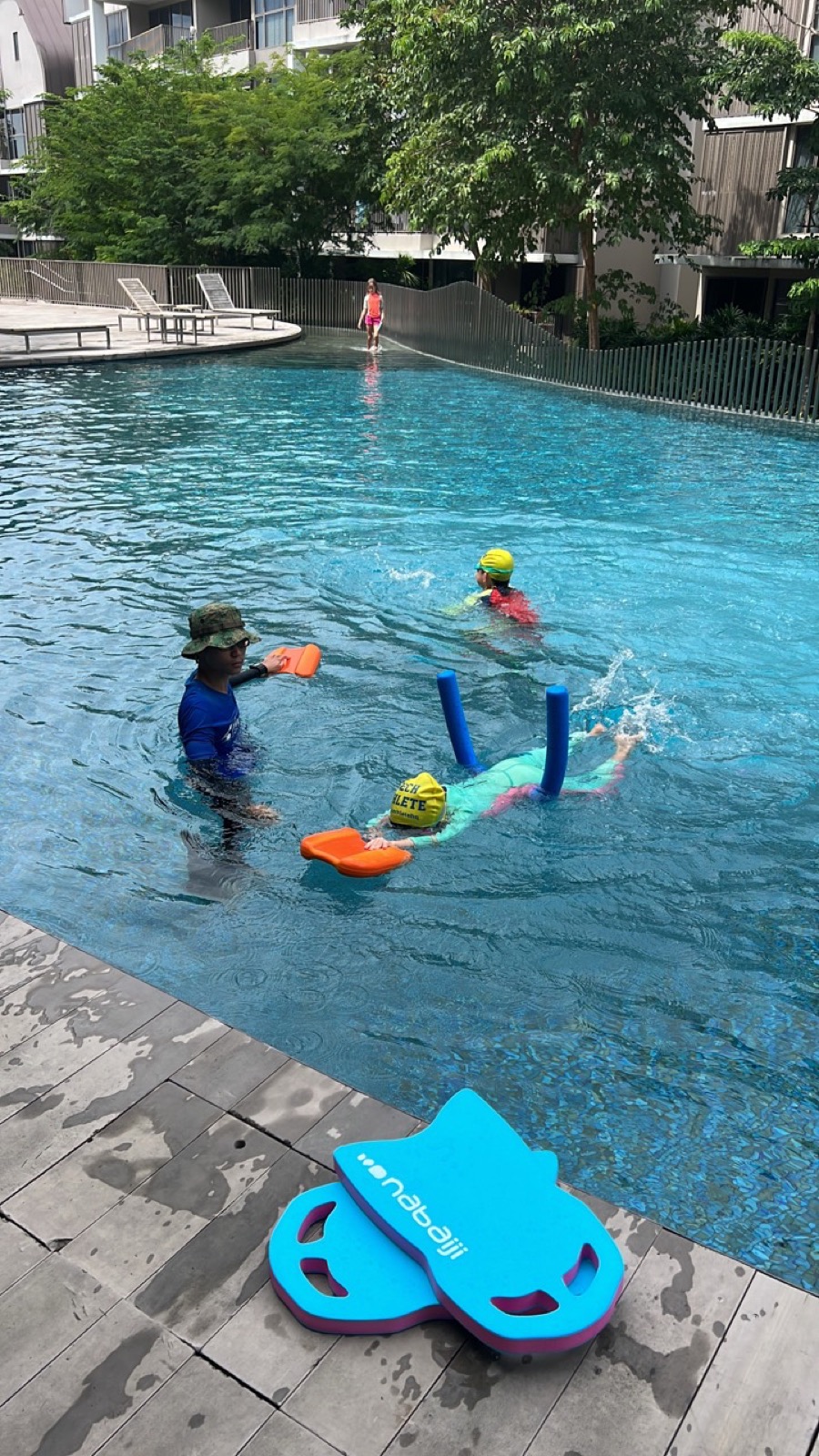
It can also work for condo families because the children know the pool, parents can observe nearby, and the coach can set simple stations such as wall holding, supported kicks, floats, and short swim repeats.
When siblings should be split
Siblings should be split when one child is frightened, impulsive, very young, or unable to listen while another child needs higher-level stroke correction or SwimSafer preparation.
The split does not always mean two separate days. A coach may recommend adjacent thirty-minute lessons, one longer session with separate drill blocks, or a private group only after both children reach a closer level.
What parents should tell the school first
Before asking for sibling swimming lessons, send each child's age, height or approximate pool-depth comfort, current ability, fear level, past lesson experience, and the goal for the next three months.
Also share where the lesson should happen. Condo pools can be convenient, but parents should confirm access rules, whether external coaches are allowed, quiet time slots, and where each child can stand safely.
How Penguin recommends the right setup
Penguin Swim School will usually advise by learner fit first: age, confidence, safety, coach attention, pool suitability, language needs, and whether the children motivate or distract each other.
For some families, the right answer is a self-formed private group. For others, it is one-to-one coaching first, then a sibling format later. The premium standard is not the cheapest combined slot. It is the lesson structure that helps each child become safer, calmer, and more capable in the water.