

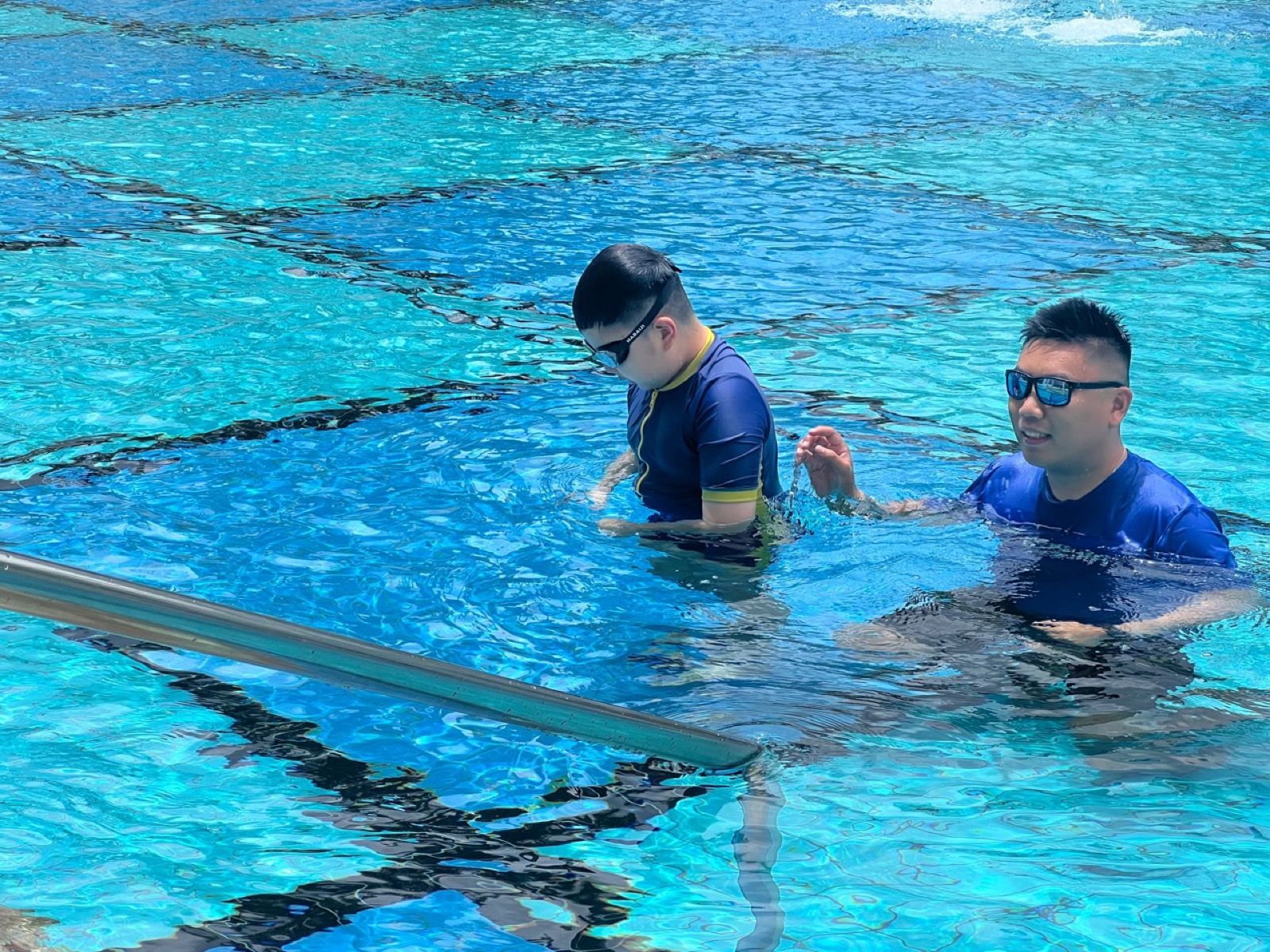
Start with a gentle fit check
The useful question is not whether a senior is too old to learn swimming. The useful question is whether the first lesson can be paced around this learner: current water confidence, balance, breathing comfort, fatigue, mobility, medical context, pool access, and privacy.
For many older adults and adult children helping a parent enquire, the first goal should be calm pool entry, safe wall or step use, breathing control, floating support, and confidence in a shallow teaching area. Stroke distance can wait until the learner is relaxed enough to practise safely.
Share health and mobility context early
Older learners should tell the school about relevant medical advice, recent surgery or illness, chronic conditions, medications that affect balance or fatigue, joint pain, breathing discomfort, hearing or vision needs, and any previous frightening water experience.
HealthHub and Singapore Physical Activity Guidelines materials support active ageing and low-impact activity, but a blog article cannot replace medical advice. If the learner is unsure whether to start or restart exercise after illness, injury, chest pain, dizziness, or a health change, speak with a doctor before booking.
Choose the pool as carefully as the coach
The pool should have a realistic teaching area, safe entry and exit, visible steps or railings where available, manageable crowding, and enough space for the coach to stay close. A familiar condo or private pool can reduce travel and embarrassment, but only when outside coaching is allowed and the pool is suitable.
For public pools, check travel time, changing facilities, crowding, shade, weather exposure, and whether the learner is comfortable practising in a more visible setting. Pool entry, lesson suitability, and coach availability should be checked separately before the family builds a plan around a particular venue.
Why private lessons often fit older adults
Private lessons are often the cleanest starting point when an older learner wants privacy, slower explanation, close correction, and room to pause without holding back a group. The coach can repeat wall work, breathing drills, assisted floating, and recovery-to-standing until the learner feels steadier.
A small self-formed group can work when learners are similar in confidence, mobility, and goals. It should not be chosen only to reduce price. If one learner needs one-to-one support, that should be said plainly before the first session.
What a respectful first lesson may include
A first senior lesson may include dry discussion, safe entry and exit practice, standing and wall confidence, face-in-water comfort, slow exhalation, assisted floating, simple kicking, recovery to standing, and short rest breaks. The coach should explain what is being observed and why the pace is being kept gentle.
Progress may look modest from outside the pool. For an older learner, a calm entry, less breath-holding, better wall control, or confidence to float with support can be a meaningful first win.
When to pause or adapt
Pause or adapt the session if the learner feels dizzy, breathless, unusually tired, chilled, in pain, anxious beyond recovery, or unable to follow a safety instruction. A premium coach should be willing to change the drill, move closer to the wall, shorten the water work, or end on a safe small win.
Do not use swimming lessons as a substitute for physiotherapy, rehabilitation, or medical treatment. If the purpose is recovery from a diagnosed condition, the family should follow clinician guidance and tell the school what boundaries have been set.
How Penguin should be used
Penguin has a senior swimming lessons page for older adults who want gentle, patient, privacy-conscious coaching. The best enquiry is specific: who is learning, what they can do now, what worries them, where they prefer to swim, and what would make the first month feel successful.
Penguin may recommend senior, adult, private, condo, family-supported, Mandarin, or female-coach guidance depending on the learner. The booking conversation still needs to confirm coach fit, pool access, timing, price, and availability.
What to send before booking
Send the learner age band, current swimming ability, water confidence, main goal, medical or mobility considerations, doctor advice if relevant, preferred pool or area, pool-access rules, caregiver or family support needs, privacy preference, preferred language, and available days and times.
This gives Penguin enough information to make a serious recommendation instead of a generic class suggestion. It also helps filter out cheapest-price or unsuitable requests before the family commits time.